
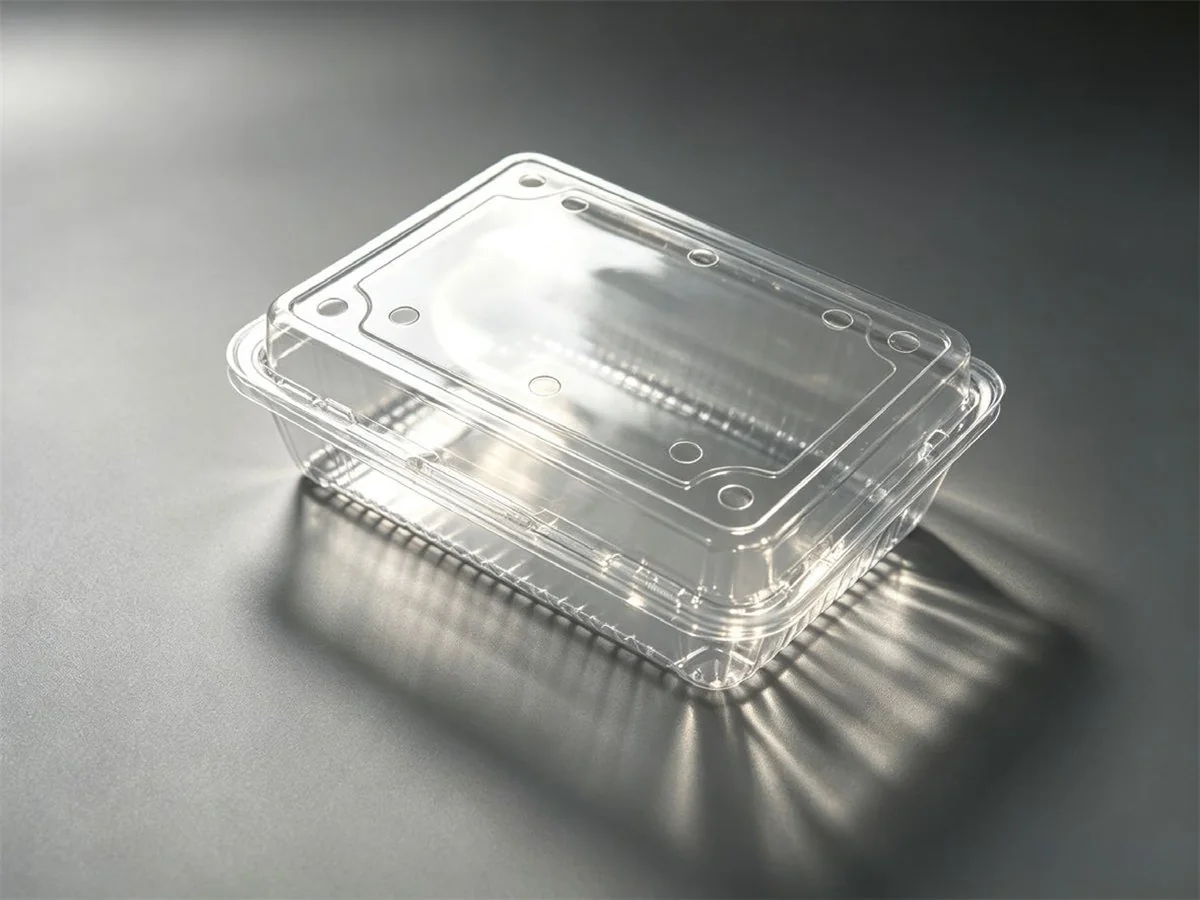
Describe the finished tray you need
Describe the finished article you need and how it reaches the pack line. Include fruit, expected quantity status and shipment destination for each version.
Add fit dimensions and the drawing revision
Record the outside footprint and usable cavity separately. An illustrative brief might say 180 × 110 mm outside, 156 × 88 mm inside and 250 g target fill, followed by measured usable depth, closure and vent positions. Attach a revisioned drawing or labelled photo if available. Check the actual fruit fit with a sample.
Clarify tooling and packaging needs
Explain whether tooling exists and who owns it. List packaging, label and trial expectations so the team can first review whether the specific tray and tool can be supplied.
Ask for a written capability response
Ask for a reply identifying confirmed capabilities, open details and any samples needed to proceed. Keep the reference and approved revisions together for later evaluation.
Finished tray capability review preparation
| Record | What to capture | Your notes |
|---|---|---|
| Intent | Finished article, fruit, quantities by variant and destination | |
| Drawing | Outside and usable inside dimensions, depth, target fill, closure and revision | |
| Capability | Tool status/owner, packing, label and trial requirements | |
| Response | Confirmed items, unresolved items and follow-up samples |
Sources
Questions buyers ask
Can I start with a labelled reference sample?
Yes. Give the sample ID, usable cavity dimensions and target fill, and mark any missing dimensions or tests as open. Agree the final drawing and acceptance method before release.
What should a capability response clarify?
Ask who can supply the specific tray, who would be responsible for tooling and which approval samples or tests are still needed before a production quote.