
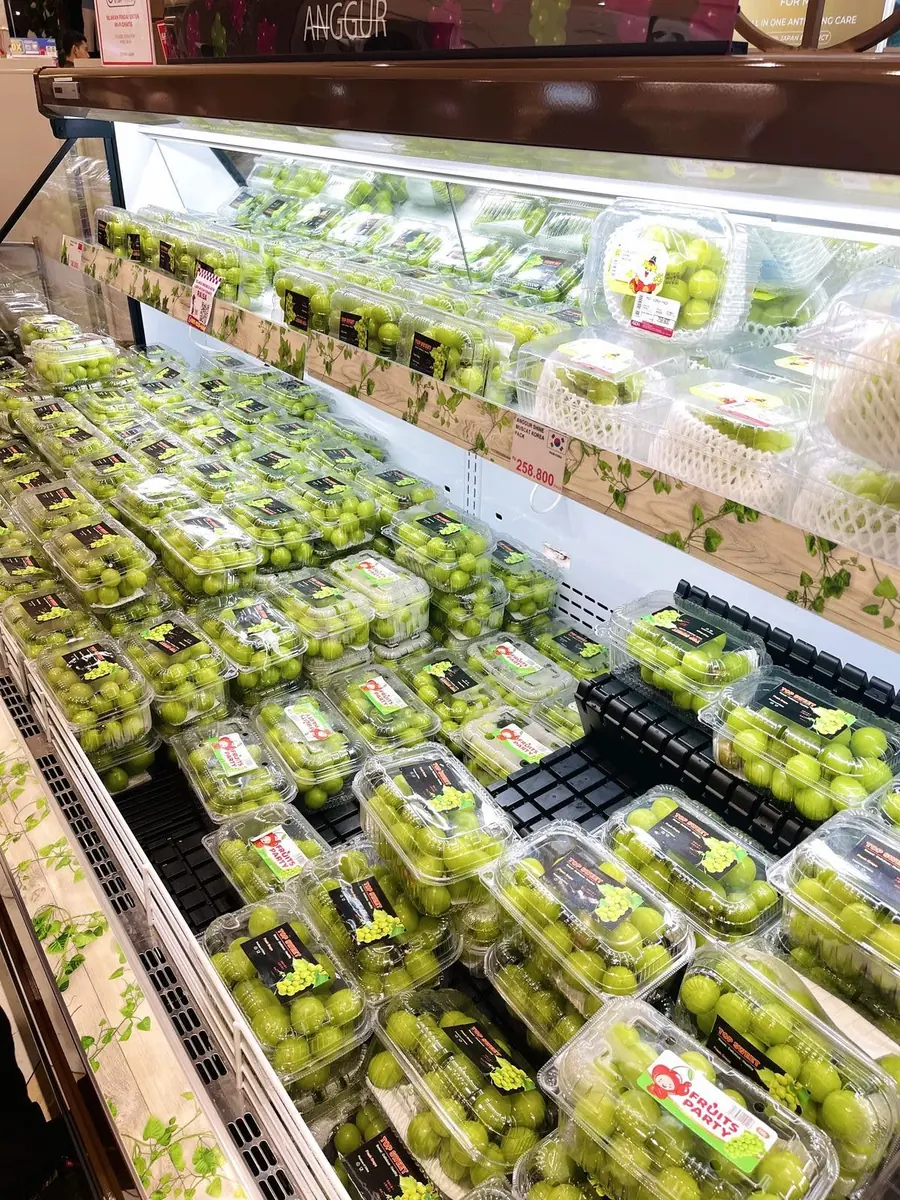
Measure the grape bunch as packed
Measure the bunch envelope, including the stem, along length, width and height. Record an ordinary bunch and a large or asymmetric bunch that represents the edge of your accepted fruit range.
Check where stems touch the pack
Try two intended fill levels using the same tray revision. Note whether the bunch can be placed naturally and photograph pressure points at the sidewall, corners and closure zone. Record whole-bunch position, rather than rotating the largest sample until it happens to fit. If packing staff can consistently reach a different orientation, mark that orientation on the sketch and retest it.
Leave clearance over the highest stem
Set the tray with the bunch in the planned orientation. Identify whether fruit or a stem is highest, then measure clearance to the corresponding point on the closed lid. Record a touch or bent lid as a separate outcome and check the same spot after normal handling.
Compare packs after handling and stacking
Draw the pack's intended orientation inside its carton and identify the supports. Repeat the handling sequence with the two fill levels and record any bunch migration or stem marks. Capture loose berries already present before the trial and count additional loose berries afterwards. UC Davis describes shatter as separation from the cap stem. The baseline helps separate a packed-handling observation from fruit already detached at filling.
Grape bunch fit trial
| Record | What to capture | Your notes |
|---|---|---|
| Bunch envelope | Bunch A/B envelope, stem projection and lot | |
| Stem contact | Fill A/B mass, bunch orientation and points of contact | |
| Headspace | Highest point, lid clearance and visible compression | |
| Packing | Carton orientation, supports, migration and stem marking |
Sources
Questions buyers ask
Can an existing punnet hold grapes?
Trial typical and large bunches, including the stems. Check that each pack closes normally and retains its fit after handling.
What should go in a grape-tray drawing?
Mark the usable cavity, preferred bunch orientation, lid plane and max stem projection observed in the trial. Add the sample weight and carton support points.