
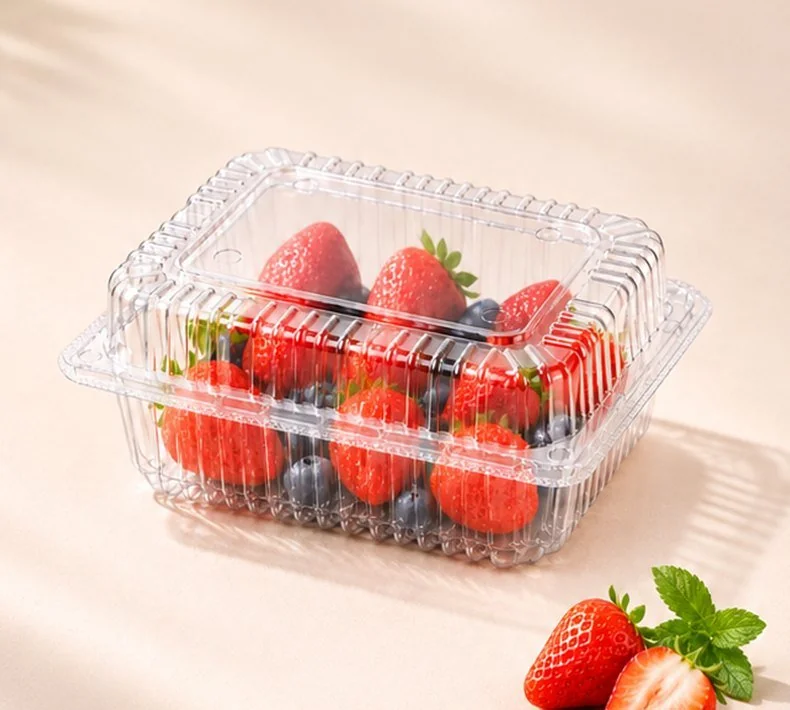
Measure the berries you actually pack
Measure the height of the strawberries that will actually be packed, including large pieces, and check where their shoulders or tips sit under the lid. For blueberries and raspberries, see whether smaller fruit collects near the closing edge after handling. Compare layouts at the same net fruit weight where possible. Photograph the top and side of each candidate pack to mark the highest fruit and any contact points.
Map vents around the fruit and label
Mark each vent row on the lid or base drawing. Place the planned label and stack the packs to see which openings remain clear through storage and handling. UC Davis strawberry handling guidance identifies prompt cooling and avoiding injury as important. Check your actual cooling setup with labelled packs inside the intended carton and keep the cooling observations separate from the handling inspection.
Check the lid against the fruit height
Close and reopen trial packs with the expected fill, checking hinge movement and latch engagement. Photograph berries trapped between rim and lid and record where they were when the latch was pressed.
Record what survives the handling trial
Fill, store and handle samples in the intended sequence. Retain a matching reference and compare bruising, closure and visibility after a representative movement or transport step.
Berry punnet drawing annotation
| Record | What to capture | Your notes |
|---|---|---|
| Fruit profile | Fruit type, size range and target fill mass | |
| Vent map | Vent zones, label outline and stacking contact | |
| Closure | Closure type, interference location and opening observation | |
| Trial | Trial sequence, sample ID, stacking and resulting observations |
Sources
Questions buyers ask
Where should I check blocked vents?
On labelled, closed punnets in their intended stack and carton. Mark the openings covered by fruit, neighbouring packs, dividers or the label.
What supports a shelf-life target?
Use results from a documented trial of the actual fruit, package and distribution conditions. Compare observations at the same times and temperatures.